
Earth Overshoot Day 2026
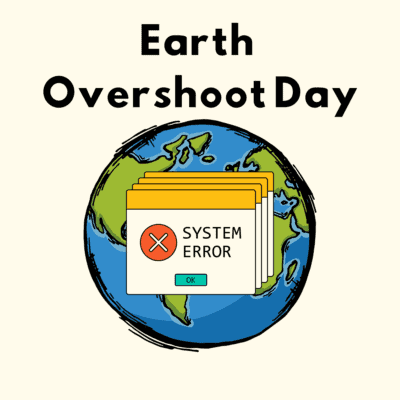
July 30, 2026 is Earth Overshoot Day. Today, humanity's demand for ecological resources has surpassed what our planet can regenerate in a full year. This year's Overshoot Day falls 5 months before the year's end, signifying that Earth's resources are in a deficit for the remainder of 2026.
This year's theme focuses on the environmental footprints of specific countries to highlight how their consumption impacts us all. If all people around the world lived like US citizens, Earth Overshoot Day would fall on March 14, 2026.
So, how can we #movethedate of #EarthOvershootDay so we are no longer dipping into future generation's resources?
1) Reduce your own footprint: follow the expanded 3R's in your own life and practice reducing, reusing, repairing, rotting, and recycling. The WWRA has many resources on how to safely dispose of common products, but we also have resources for items that are not at the end of their lives. Donate or give away items you will no longer use, and make sure each item you own is used to its fullest. Composting and reducing your food waste is one of the best ways to lower your environmental footprint. Start your own backyard compost or reach out to chelseazwc@gmail.com for more local composting options.
2) Buy secondhand and recycled materials. After the WWRA receives your recyclables, we send them to recycling centers to be made into new items. Showing companies that you want more recycled materials encourages them to purchase more. This ensures that all recyclables will be made into new products and creates a circular economy. Every piece of packaging that is made of recycled materials is one less that will be made of virgin materials we extract from the Earth.
3) Regenerate our resources. Consider regenerative practices on a large scale or in your own backyard. To offset your own environmental impact by planting trees in environmentally endangered areas, click here. To regenerate the Earth in your own backyard, consider replacing traditional lawns with wildflower gardens and native wildlife habitats. Visit NWF.org for more information.
4) Advocate! Get involved in your community and protecting the world around you. Stay up to date on local events and proposals. Visit our Board Meetings page to get involved with the WWRA.